
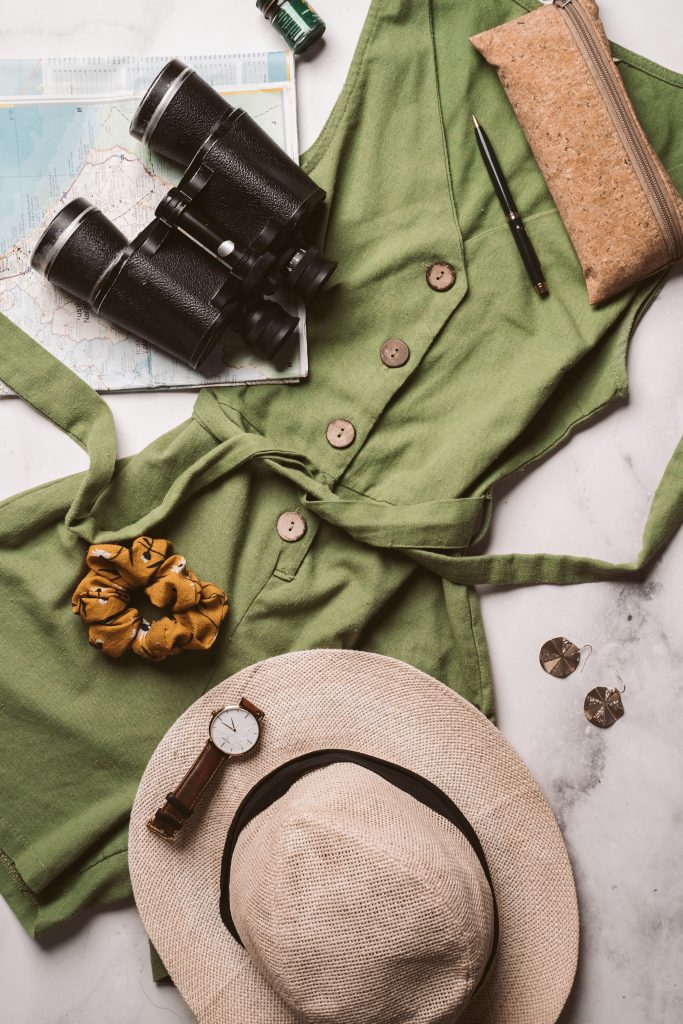
Packing for a Tanzania safari is less about bringing a lot and more about bringing the right things. Between bumpy game-drive roads, strict light-aircraft luggage limits, and days that swing from cold mornings to hot afternoons, here’s what actually earns its place in the bag.
Clothing
Neutral colours — khaki, olive, sand, muted greens — are the safari standard, mainly because they don’t stand out to wildlife and hide dust well. Avoid bright white, black and camouflage patterns (the latter has legal restrictions for civilians in Tanzania). Layers matter more than volume: a warm fleece or light jacket for early morning game drives, breathable long sleeves for sun and tsetse-fly protection during the day, and something warm for evenings at higher-altitude camps. A wide-brimmed hat and a buff or scarf for dusty roads round out the essentials.
Footwear
Comfortable, closed-toe walking shoes are the priority — most of your time will be spent in a vehicle, but any walking safari or camp movement calls for solid footwear. Sandals are fine for around the lodge or pool, but shouldn’t be your only option.
Gear that actually gets used
Binoculars are the single most valuable item in the bag for genuinely spotting wildlife at distance — most vehicles carry a pair, but a personal set means you’re not sharing. A good camera or phone with zoom, spare batteries or a power bank (camp electricity isn’t always constant), and a dry bag or dust cover for electronics during game drives are all worth the space. If you’re prone to motion sickness on unpaved roads, pack accordingly.
Health and practicalities
Sunscreen and insect repellent are non-negotiable — Tanzania sits close to the equator and sun exposure is intense even on overcast days. Bring any personal medication in original packaging along with a basic first-aid kit, and check in advance whether your route requires a yellow fever certificate or antimalarial prophylaxis, since requirements can depend on your onward travel. A reusable water bottle cuts down on plastic waste and most camps will happily refill it.
The luggage limit that catches people out
If any part of your trip involves a light aircraft transfer — common between the Northern and Southern Circuits — luggage is usually limited to around 15kg in a soft-sided bag, with a strict no-hard-shell-suitcase policy. Pack a soft duffel as your main bag even if you’re travelling entirely by road, since it’s easier to fit into a safari vehicle regardless.
What to leave behind
Heavy or excessive luggage, an entire wardrobe of colours, valuables you’d hate to lose to dust or a bumpy road, and — despite what packing lists elsewhere might suggest — most formal wear. Safari camps, even the comfortable ones, run casual.