
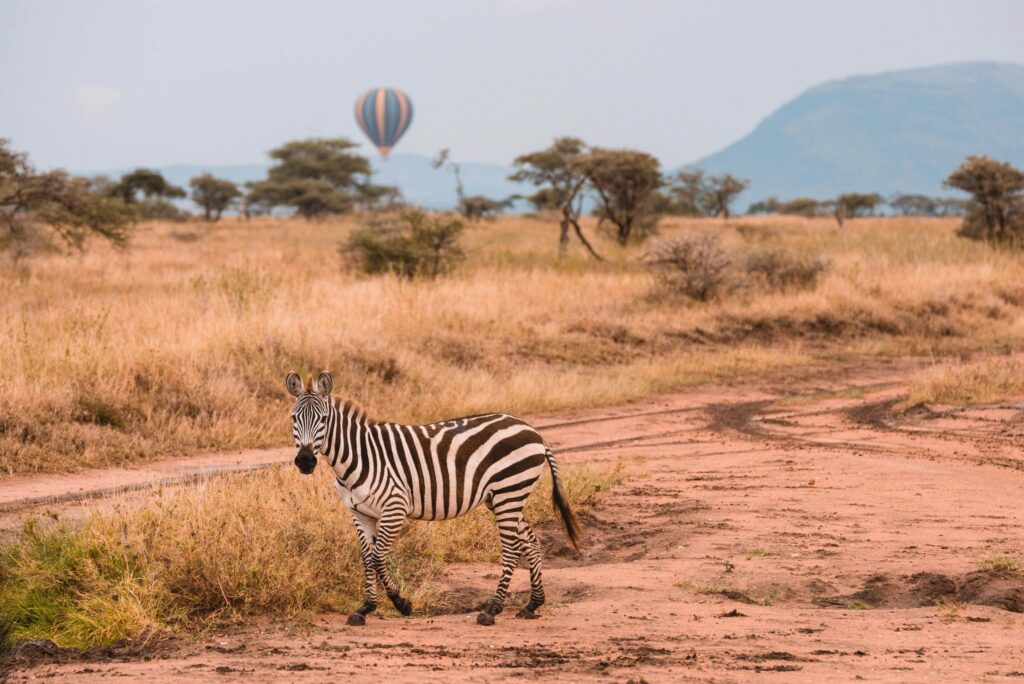
“When’s the best time to visit Tanzania?” is the question we hear more than any other — and the honest answer is that Tanzania rewards visitors almost year-round, provided you know what each season actually offers. Here’s how the year breaks down, season by season.
Dry season: late June to October
This is peak safari season, and for good reason. With little rain, vegetation thins out and animals gather around rivers and waterholes, making wildlife far easier to spot. It’s also when the Great Migration typically crosses into the northern Serengeti and the Mara River, with the accompanying river crossings from around July onward. Skies are clear, mornings are cool, and roads are at their most reliable — but expect the busiest parks and the highest lodge rates of the year, especially in the Serengeti and Ngorongoro Crater.
Short rains: November to December
A quieter, greener window. Short, usually afternoon showers freshen up the landscape without disrupting game drives much, and newborn wildebeest and zebra calves start appearing on the southern Serengeti plains. Parks are noticeably less crowded than the dry season, and prices ease off — this is a strong pick for travellers who want good wildlife viewing without the July–August crowds.
Long rains: March to May
The wettest months, and the quietest. Some lodges close and a handful of roads become difficult, particularly in remote areas. But for budget-conscious or flexible travellers, this is when rates drop the most, birdlife is at its best, and the landscape turns a deep green that photographs beautifully. Parks like Mikumi, Ruaha and the Southern Circuit generally cope better with rain than the Serengeti’s black-cotton soil roads, making the south a smart choice during these months.
Dry, cooler months: January to February
A short, often-overlooked sweet spot. The short rains have passed, the crowds haven’t arrived yet, and the southern Serengeti plains are typically full of calving wildebeest — one of the most dramatic (and least crowded) wildlife spectacles in Tanzania. It’s also a good window for Kilimanjaro treks, with more settled weather before the March rains.
So, what’s actually “best”?
It depends entirely on what you want. Chasing the Mara river crossings, June to October is unbeatable. Want calving season and thinner crowds, aim for January–February. Travelling on a tighter budget or drawn to the Southern Circuit’s parks like Mikumi and Ruaha, the long rains are far less disruptive than they sound. There is genuinely no wrong time to visit Tanzania — only a different version of the same extraordinary country.
Tell us your travel dates and we’ll suggest the right route →